Serviced Apartments in Bangkok: Best Options for Monthly and Long Term Stays
Find the best serviced apartment in Bangkok to suit your needs. Compare neighborhoods, costs, and visa considerations for long-term living.

Thailand is often first discovered as a travel destination. But for many families, it gradually becomes something more. The country offers a warm and welcoming culture, a relatively affordable cost of living, access to international schools, and a healthcare system that consistently ranks among the best in the region. These qualities make destination Thailand an attractive place not just to visit, but to live.
In the early stages, many families rely on short-term visas, a multiple visa for Thailand, or visa runs to extend their stay. At first, this approach may seem manageable. However, as daily routines develop—school schedules, childcare, medical appointments, and work commitments—parents often begin to question whether the visa run lifestyle is truly practical for long-term family living in Thailand.
A visa run refers to the practice of exiting Thailand and re-entering the country in order to reset or extend the permitted length of stay under a short-term visa or visa exemption. This may involve a brief trip to a neighboring country or a short international flight, followed by re-entry through a Thai immigration checkpoint. For some families, visa runs are used alongside options such as a multiple-entry tourist visa, which allows repeated entries within a limited timeframe. While this method can extend time in Thailand temporarily, it does not provide the same predictability as a long-term residency solution.
Families often turn to visa runs during the early stages of living in Thailand because the approach feels flexible and straightforward. For those who are still exploring neighborhoods, schools, or long-term plans, visa runs or multiple visa for Thailand arrangements can appear to offer breathing room without long-term commitments or complex application processes.
At this stage, parents may view visa runs as a temporary solution that allows them to spend more time in destination Thailand while deciding whether the country is the right fit for their family. For short stays or trial periods, this method can seem practical, especially when children are not yet enrolled in school or when work arrangements remain flexible. However, as families stay longer and daily life becomes more structured, the limitations of relying on visa runs begin to surface—prompting many to reassess whether this approach truly supports long-term family living in Thailand.
As families settle into life in Thailand, the limitations of visa runs become more apparent:
For most families, there comes a point when visa runs are no longer a practical long-term solution. Maintaining consistent routines for education, healthcare, and daily life becomes increasingly difficult. Parents often find that the lack of visa stability affects everything from enrolling children in schools to accessing certain services. What once felt flexible begins to feel restrictive, and families naturally start looking for solutions that support a more settled way of living in Thailand.
Families planning to stay long term generally prioritize stability over flexibility. Key needs often include reliable access to healthcare, predictable immigration status, and support with essential administrative processes. Time-saving conveniences also become more important, particularly when traveling in and out of Thailand with children. Rather than repeatedly solving short-term problems through visa runs or a multiple visa for Thailand, families tend to seek a structure that allows them to focus on daily life, family time, and long-term planning.
Thailand offers several long-stay pathways designed for different lifestyles, including retirees, frequent travelers, and families who plan to remain in the country for extended periods. One such option is a membership-based long-stay program, such as Thailand Privilege Card. This approach provides a long-term visa framework combined with coordinated services that reduce the need for repeated visa runs or reliance on a multiple-entry tourist visa.
Depending on the membership tier, families may benefit from multi-year visa validity, airport services, and access to dedicated assistance teams. For example, Thailand Privilege Card members receive support through Elite Personal Assistant (EPA) at major airports for airport VIP services and Elite Personal Liaison (EPL) for administrative coordination, including visa-related processes and immigration appointments. These services are designed to simplify logistics rather than replace legal requirements, helping families manage long-term living more efficiently. Importantly, such programs are intended for long-term stay and lifestyle convenience, not employment authorization, and are structured to align with Thai immigration regulations.
While visa runs may work for short-term stays, they often become impractical as families build a life in Thailand. Stability, predictability, and access to essential services matter far more when children, education, and long-term wellbeing are involved. For families planning to make Thailand their second home, long-stay solutions offer a more sustainable alternative to constant travel and uncertainty. By reducing administrative stress and providing a clear framework for extended residence, these options allow families to focus on what truly matters—living comfortably and confidently in Thailand.
Thailand Privilege Card also makes it easy for families to stay together. Through the Supplementary Member Program, spouses and children can be added to Platinum, Diamond, and Reserve memberships for a special cost of 500,000 THB*. This allows every loved one to enjoy the same visa stability and elevated way of living.
Ready to begin your journey in Thailand?
Starting with the Thailand Privilege Platinum Card, your family deserves a smooth, secure, and hassle-free start in Thailand. Begin your new chapter today with a Thailand Privilege Card family membership, and turn the challenge of expat family relocation Thailand into a lifetime of comfort.
*Supplementary membership is available as a limited offer.

Find the best serviced apartment in Bangkok to suit your needs. Compare neighborhoods, costs, and visa considerations for long-term living.

Bali and Thailand both draw digital nomads but differ on infrastructure, visas, and long term stability. Here is how Bali vs Thailand for digital nomads compares.

Bangkok and Phuket offer very different long term lifestyles. Here is how to decide where to live in Thailand and how Thailand Privilege Card supports either choice.

Explore why expats and retirees choose living in Hua Hin for its low costs, beach lifestyle, and strong international community in Thailand.

Thailand offers tropical living, world class healthcare, and flexible long term visa options, making it one of the best places in the world to retire.

Discover why Thailand ranks as the best country to live in Asia for expats and retirees when it comes to costs, healthcare, and long-term visa options.

Foreign entrepreneurs setting up a business in Thailand need solid groundwork before company registration and market entry can begin.

Bangkok has over 100 international schools across multiple curricula. This guide covers the best international schools in Bangkok for expat families relocating in 2026.

From Silom to Sukhumvit, here is a guide to Bangkok's most LGBTQ+ friendly areas and why Thailand is so welcoming for long term residents and couples.

Explore the best parks in Bangkok for retirees and learn how a retiree visa in Thailand through Thailand Privilege Card supports a healthy lifestyle.

Experience northern Thai culture and learn how a long term visa in Thailand through Thailand Privilege Card supports a settled, enriched life in the north.

Find the best international school in Thailand for your family and learn how Thailand Privilege Card supports your long-term relocation.

Everything expats need to know about healthcare in Thailand, from JCI-accredited hospitals to the health benefits of Thailand Privilege Card membership.

Discover the best Bangkok neighborhoods for expats and their families, and how Thailand Privilege Card supports their long-term move.

Wondering how safe is Thailand for long-term living? Explore crime rates, healthcare, legal stability, and how Thailand Privilege Card supports your stay.

Learn how to get residency in Thailand as a family without separate applications. One program, one timeline, everyone included.

Discover the pros and cons of living in Chiang Mai as a foreigner. Explore the cost of living, lifestyle benefits, and long-term visa solutions for expats.

Discover your options for expat health insurance in Thailand, including plan types, visa rules, typical costs, and long-term stay support.

Compare Thailand Privilege Card vs Thailand Long Stay Visa to understand their eligibility, costs, and lifestyle benefits for long-term residency.

Discover why Thailand ranks among the best places to start a new life in 2026. Compare costs, visa options, and lifestyle benefits.

Your essential moving to Thailand checklist covering long-term stay options and costs. Learn how Thailand Privilege Card makes family relocation simple.

Discover the friendliest countries in the world for expats. Learn why Thailand tops many lists and how Thailand Privilege Card makes residency simple.

Same-sex marriage in Thailand for foreigners is now legal. Learn about your rights and how Thailand Privilege Card supports long-term stays for couples.

Explore why Thailand ranks among the top digital nomad locations and how Thailand Privilege Card supports long-term stay and lifestyle stability.

Find out why Thailand Privilege Card is the ultimate choice for global citizens. Experience seamless living, exclusive access, and a truly enriched lifestyle.

Learn how to strategically turn your investment into a significant lifestyle upgrade while effectively managing and reducing your visa costs to Thailand.

Discover why Thailand is the most effortless place for retiree investors to stay and relax while growing wealth and enjoying world-class wellness in paradise.

Stop worrying about visa renewals. Learn how Thailand Privilege Card supports long-term living without permanent residence complexity for a seamless lifestyle.

Discover how Thailand Privilege Card makes long-term living effortless for global digital nomads. Learn about why Thailand is the ultimate home base for work and life.

Discover why expat families are choosing Thailand for its safety, comfort, and exceptional lifestyle. Learn how Thailand long-term visas make family living easier with Thailand Privilege Card.

Maximize your future. How Thailand Privilege Card serves as a crucial investment, directly accelerating your journey toward permanent residence Thailand status.

Discover how to transform your families vacations into permanent homes. Learn about living costs, long-term visa options make Thailand the perfect destination.

Relocate your family to Thailand and enjoy a lifestyle defined by relaxation, comfort, and long-term happiness. We provide guidance to help you settle smoothly.
.webp)
Compare Thailand Privilege benefits against other long-stay visas. See why expats choose our flexible, service-backed option for an unparalleled stay experience

Is Thailand your Journey Becomes Home? Use our essential Golden Age Checkup to answer 7 critical questions senior expats must resolve for a smooth, permanent move.
.webp)
Unlock the doors to Thailand's top business circles. This guide shows foreign investors how to gain exclusive access and build a powerful professional network
.webp)
Stop worrying about moving abroad. This essential family relocation checklist pinpoints and resolves the five concerns foreigners face when settling in Thailand
.webp)
Moving your family to Thailand just got simpler. See how the Thailand Privilege Card Concierge service eliminates relocation stress with dedicated support for every new homeowner.

Ready for a change? Dive into Thailand's booming remote work scene. Find the best cities, co-working spaces, and vital tips for every digital nomad success.
.webp)
Wondering about your budget in Thailand? See the true cost of a comfortable lifestyle, covering housing, daily expenses, and leisure activities in detail.

Explore the top reasons why Thailand is booming as an investment destination. Discover opportunities, economic stability, and key growth sectors for success

Planning a move? Discover the ultimate guide for expat families! Find top international schools and learn how to create a seamless, worry-free life in Thailand
.webp)
Is the Thailand Privilege Card right for your family? See why it offers the best long-stay visa solution, providing stability and exclusive perks for all member
.webp)
See the real expat life! We reveal strategies for successfully combining work and leisure in Thailand, turning the Land of Smiles into your perfect office.

Investors in Thailand: Navigate the complex legal framework, tax rules, and financial regulations with confidence. Essential guide to protect your investments.
.webp)
Don't leave your best friend behind! Secure a great, pet-friendly family life when moving to Thailand. We provide the essential guide for a smooth transition.
.webp)
Urban hustle or nature's peace? Decide your Thailand nomad setting. The Privilege Card provides the long-term visa security you need to truly settle in.

Enjoy a seamless lifestyle in Thailand with Thailand Privilege — now offering all supplementary memberships at a special flat rate of THB 500,000.

Elevate your expat family life with unparalleled exclusive privileges. Find out how these benefits simplify daily living and enrich your experience abroad.
.webp)
Designed for wealthy pensioners. Explore how Thailand Privilege enhances your retirement, providing a secure and comfortable lifestyle with exclusive benefits.

Considering a Thailand Privilege Card? Discover if this exclusive membership aligns with your lifestyle and travel needs. Uncover all the benefits now.
.webp)
Discover the ancient art of Thai massage. Experience ultimate relaxation and deep rejuvenation, melting away stress. Your path to well-being starts here.
.webp)
Stay healthy in Thailand's paradise. Our guide details annual health check-ups, helping you prioritize proactive wellness with ease and confidence.
.webp)
Navigating finances in Thailand? Our guide simplifies money management for both visitors and residents. Get essential tips for banking, budgeting, and more.
.webp)
Worried about safety for long-term living in Thailand? This guide provides crucial insights to help you settle down securely and without any concerns.
.webp)
Navigating Thai visas for couples? This guide clarifies whether a Marriage Visa or Thailand Privilege Card suits your needs for a stable life in the Kingdom.
.webp)
.webp)
Thailand is Asia's top choice for long-term living. Experience an affordable, rich culture, and beautiful landscapes. Find out why it's your ultimate home.
.webp)
Make your move to Thailand easy and enjoyable. Use our essential checklist to smoothly handle visas, finances, and cultural integration for a new chapter.
.webp)
Deciding to rent or buy property in Thailand? Get expert insights on the pros & cons, legalities, and market trends to make your best investment choice.
.webp)
Embrace your golden years in Thailand! This guide helps retirees find their perfect home, navigate expat life, and connect with a vibrant community.
.webp)
Explore Thailand with ultimate freedom! A multiple-entry visa allows unlimited visits within 6 months, perfect for flexible travel and regional adventures.

Dream of living long-term in Thailand? Discover essential guides on visas and expat life. Make the Land of Smiles your permanent home with confidence.

Dreaming of long-term remote work in Thailand? This guide covers the Destination Thailand Visa, legalities, and flexible living options for digital nomads.

Ensure your trip is worry-free with travel medical insurance Thailand. Get coverage for medical emergencies and healthcare needs while you long stay in Thailand.
.webp)
Discover Thailand investment visa requirements, costs, and eligibility to see if this route, or Thailand Privilege Card, fits your move.
.webp)
When considering long-term residency in Thailand, several visa options are available to suit different lifestyles and needs. Below is a comparative overview of the Thailand Privilege Card (formerly Thai Elite Visa), Destination Thailand Visa (DTV), Long-Term Resident (LTR) Visa, and the Retirement Visa.

Many LGBTQIA+ expats are drawn to Bangkok because it offers specialized medical services that are often inaccessible or cost-prohibitive in other countries.

Thailand’s innovation in wellness and health tourism sets it apart as a global leader in the industry. With its combination of traditional therapies
.webp)
Thailand has become one of the world’s most sought-after destinations for digital nomads, offering an ideal combination of affordability, lifestyle, and connectivity.
.webp)
Thailand has long been celebrated as a cultural hub of acceptance and diversity, making it one of the most LGBTQIA+-friendly countries in Asia.
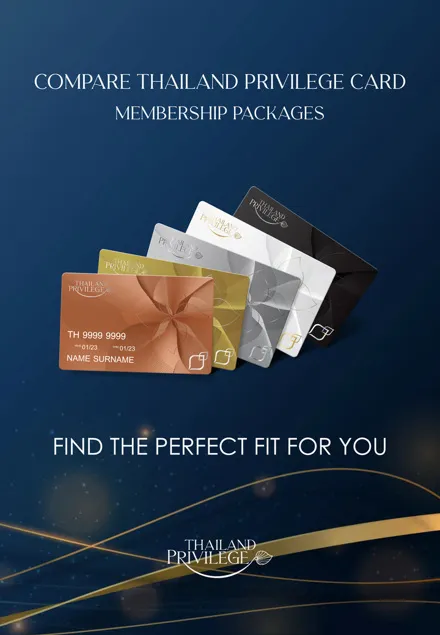
Thailand Privilege Card offers five exclusive membership tiers, each tailored to provide long-term residency benefits, VIP privileges, and a seamless experience for those looking to stay in Thailand without complications. Whether you are a frequent traveler, retiree, investor, or luxury seeker, there is a membership package designed to meet your specific needs.
.webp)
The LTR Visa offers stability and work opportunities for professionals and investors in Thailand, while the Thailand Privilege Card provides luxury benefits.
.webp)
Discover Thailand's wellness retreats and exclusive Thailand Privilege Card perks for those seeking holistic health and rejuvenation.
.webp)
The Long-Term Resident Visa in Thailand offers up to 20 years of validity, ideal for digital nomads seeking stability without frequent renewals.
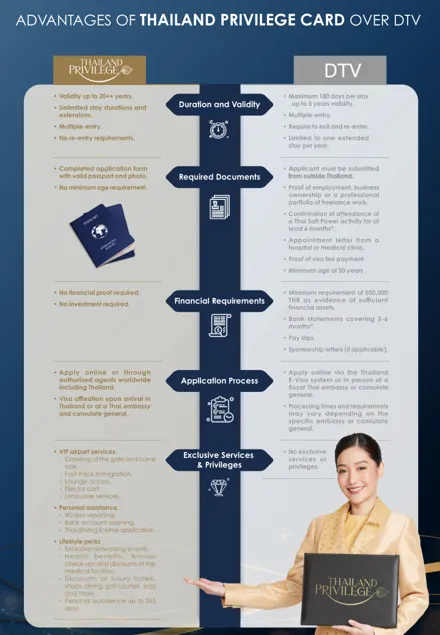
For those considering a long-term stay in Thailand, Thailand Privilege Card (often known as the Elite Visa) is designed to offer an unparalleled experience that goes far beyond the standard residency options like Destination Thailand Visa (DTV).
-(1).webp)
Find out how to open a bank account in Thailand as a foreigner, which banks work best, and how Thailand Privilege Card makes the process effortless.
.webp)
Experience your dream retirement in Thailand! Plan ahead, choose the perfect location, and leverage resources like the Thailand Privilege Card.
.webp)
Whether considering permanent residence in Thailand or exploring options for a few years, various residency options meet diverse needs with careful planning.
.webp)
The Thailand Privilege Card is an ideal companion for anyone seeking an extended stay in Thailand while working remotely as a Digital Nomad.
.webp)
As the golden years approach, many retirees seek a destination that offers a perfect blend of natural beauty, rich cultural experiences, quality healthcare, and an affordable cost of living. Thailand, with its warm tropical climate, friendly locals, and diverse attractions, emerges as an idyllic retirement haven—a true match made in heaven for those seeking an exceptional retirement experience.
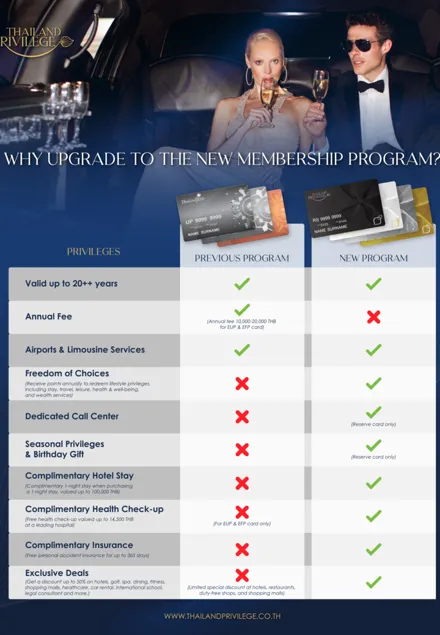
Experience the Ultimate Luxury with Thailand Privilege Card New Package Discover Thailand Privilege Card new membership program that redefines luxury and convenience for our members. Valid for over 20 years, this new program offers an extensive range of benefits without an annual fee, making it an exceptional value proposition compared to previous packages.

Choosing the right visa type can greatly enhance the experience of visiting or residing in Thailand. Thailand Privilege Card Visa and Free Visa are two distinct options available to foreigners, each with its own set of benefits and limitations. This article will explore why Thailand Privilege Card Visa might be a more advantageous choice over the Free Visa, considering various factors such as duration, flexibility, and additional perks.

In a world where acceptance and inclusivity remain an ongoing battle, Thailand fondly known as the "Land of Smiles," has long been a welcoming destination for the LGBTQIA+ community. Now, Thailand has moved a step closer to legalizing same-sex marriage, a landmark decision that could make it the first country in Southeast Asia to recognize same-sex unions by the end of 2024.

Foreigners aiming to stay in Thailand have two prominent options: Thailand Privilege Card offers long-term stays for up to 20++ years with unlimited entry, while Free Visa provide short-stays for up to 30 days (or 90 days for certain countries) with single entry.

Discover insights into the prominent pathways currently available for long-term residency in Thailand, including Thailand Privilege Card and other types of long-stay visas. Let's navigate through the different options to guide you towards a well-informed decision for your long-term residency in Thailand.

Discover your options for a retirement visa in Thailand. Learn the official routes and how Thailand Privilege Card makes settling in effortless.
.webp)
For our very first Highlight Thailand section, we would like to share with you the article written by René Zografos, a half Norwegian half Greek journalist, photographer, and writer of a famous book “How the World Sees America”. In this article he has compiled ten reasons given by tourists around the world for choosing Thailand as their getaway destination and why Thailand is worth visiting. Let's see what those tourists have to say about Thailand.
-1-(1).webp)
The term ‘New Normal’ is the current phrase we have frequently heard, describing people’s new way of life which seems normal during the COVID-19 pandemic, whether working from home or practicing social distancing. This new normal way of life might have not existed before, but it has now become our usual and current lifestyle, which also goes for the way we shop. With the stay-at-home order to prevent the spread of COVID-19 and the closure of shopping malls and shops all around,
.webp)
It’s sad but true that most of the nutritional and healthy foods are hard to swallow, especially the medicinal vegetables and herbs. That statement may ring true somewhere else, but in Thailand, we have our appetizing ways to make those therapeutic ingredients more than enjoyable. The 6 following dishes from across Thailand’s regions are the quintessential examples of how Thai cuisine helps the medicine go down in a most delightful way!
.webp)
We would like to keep you posted on the top 8 travel trends, based on in-depth analysis from more than 180 million guest reviews at various kinds of getaway accommodation as well as 22,000 surveys from globe trotters from 29 countries worldwide. Let’s find out what those 8 current trends are and if you wish to follow suit.


Enter PIN
Please enter your pin code to continue.

Only for Thailand privilege card membership
Please log in or register card membership to redeem of experience more excluslve privileges

