Luxury Shopping in Bangkok for Long Term Residents
Bangkok's best malls, from Siam Paragon to Iconsiam, make it one of Southeast Asia's top destinations for luxury shopping and premium retail.

For expats, retirees, and remote professionals evaluating the cost of living in Thailand, understanding the country's tax environment is a practical necessity. Value Added Tax affects daily spending across dining, retail, professional services, and utilities, and recent discussions around a potential increase to Thailand's 10% VAT have added a layer of uncertainty that prospective long term residents understandably want to clarify before committing to a move.
Thailand Privilege Card provides the multi year long-term visa stability that allows members to plan their financial lives in Thailand with a genuine long horizon, underpinned by a dedicated service team that supports the administrative aspects of relocation and settled life. This guide covers how Thailand's VAT system currently works, what the latest news of Thailand's VAT increase to 10% actually means, and how the overall tax environment affects the real cost of living for foreign residents across different spending categories.
Note: This article is intended for general informational purposes and does not constitute tax or financial advice. Readers should consult a qualified tax professional before making decisions based on the information provided.
VAT in Thailand is a consumption tax applied to most goods and services sold in the country. It is collected by VAT registered businesses at each stage of the supply chain and is typically either included in the displayed price or added at the point of checkout depending on the type of vendor. For daily consumer transactions such as supermarket purchases, restaurant meals, and retail shopping, VAT is generally already embedded in the price shown.
Current VAT Structure
Thailand's Revenue Code sets the statutory rate at Thailand's VAT at 10%. However, the government has maintained a reduced applied rate of 7% through a series of royal decrees that temporarily reduce the rate in support of economic stability and consumer affordability. The most recent extension maintains the 7% applied rate through at least September 2026. Until a formal policy change is legislated and enacted, the 7% rate remains the operative rate for all standard transactions.
What Is Subject to VAT
VAT applies to most goods and retail purchases, restaurant and hotel services, professional services, and certain utilities. Some categories are exempt or zero rated, including basic agricultural goods, educational services, and certain medical services. Residential rental income for individual landlords is generally not subject to VAT, which is a meaningful point for expats budgeting their housing costs.
Coverage of news of Thailand's VAT increase to 10% has circulated periodically in financial and expat media, and it is worth separating proposal from confirmed policy. Discussions at the government level around increasing VAT to the statutory rate have been framed as a means of boosting national revenue and supporting long term public spending commitments. These discussions reflect genuine policy considerations rather than purely speculative commentary.
However, no confirmed short term plan to implement Thailand's VAT at 10% has been announced as of the time of publication. The government's stated focus remains on economic recovery and maintaining cost of living stability for consumers and businesses. Any future increase would in practice be more likely to be phased gradually rather than applied as a single immediate adjustment, giving residents and businesses time to plan accordingly. The most important takeaway from the current news cycle is that the 7% rate remains in force and that any confirmed change would be publicly announced with reasonable lead time.
Daily Expenses
For most day to day spending categories, VAT is already factored into displayed prices, meaning the practical impact on a daily budget is less visible than in countries where tax is added separately at checkout. Grocery shopping at supermarkets, street food, and local market purchases follow Thai retail norms where prices are displayed inclusive of applicable tax. The overall impact on daily living costs remains relatively moderate compared to Western tax systems operating at 15 to 25%.
Housing and Utilities
Residential leases for private accommodation are generally not subject to VAT for individual landlords, meaning that rent sits outside the VAT calculation for most housing arrangements. Utility services including electricity and water, building management fees, and professional services engaged as part of maintaining a residence may include VAT at the applied rate.
Dining and Lifestyle Spending
Restaurants, hotels, and lifestyle service providers typically include both VAT and a service charge on their bills. The combined addition of 7% VAT and a 10% service charge at mid-range and upscale venues means the final bill can be notably higher than the menu price. Even with these additions, lifestyle spending in Bangkok and across Thailand's major expat destinations remains significantly more competitive than equivalent spending in European or North American cities.
Thailand's current 7% applied VAT rate and even Thailand's 10% VAT statutory rate sit at the lower end of the global spectrum. Most Western European countries apply VAT at 20% or above, with some exceeding 25% for standard rated goods and services. Within Southeast Asia, VAT rates range from 7% in Singapore and Thailand to 12% in the Philippines, placing Thailand in a broadly competitive position relative to its regional peers.
The more meaningful measure for expats evaluating the cost of living in Thailand is not the VAT rate in isolation but the combined effect of lower baseline costs across housing, food, transport, and healthcare alongside the tax environment. Even if Thailand's VAT rate were to reach 10%, the overall cost of living for foreign residents would remain substantially lower than in most Western countries due to lower underlying price levels across most spending categories.
Managing the financial dimensions of long term life in Thailand is most effective when built on stable residency. Thailand Privilege Card provides multi year long-term visa validity from 5 to 20 years, removing the renewal uncertainty that disrupts financial planning for residents on shorter stay arrangements. Members can plan their tax position, housing commitments, and lifestyle spending across a genuine long horizon rather than around annual visa decisions.
Elite Personal Liaison (EPL) assists members with the administrative steps involved in establishing life in Thailand, including bank account applications, Tax Identification Number registration, and government office coordination. Elite Personal Assistant (EPA) delivers Airport VIP Services at Suvarnabhumi, Phuket, and Chiang Mai international airports on every arrival and departure. Member Contact Center (MCC) provides 24/7 multilingual support for any query or service coordination request throughout a member's stay.
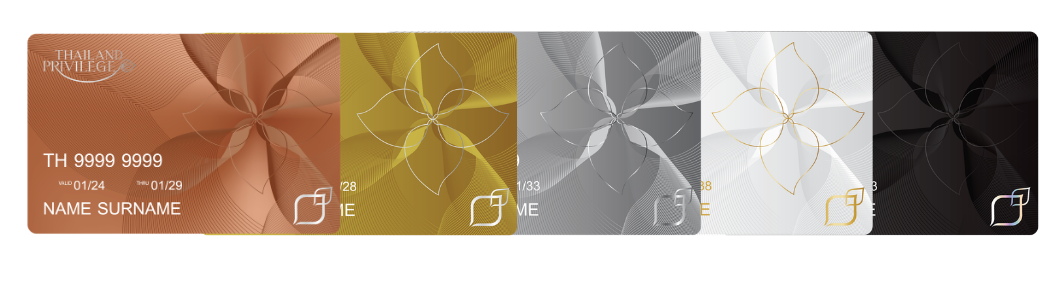
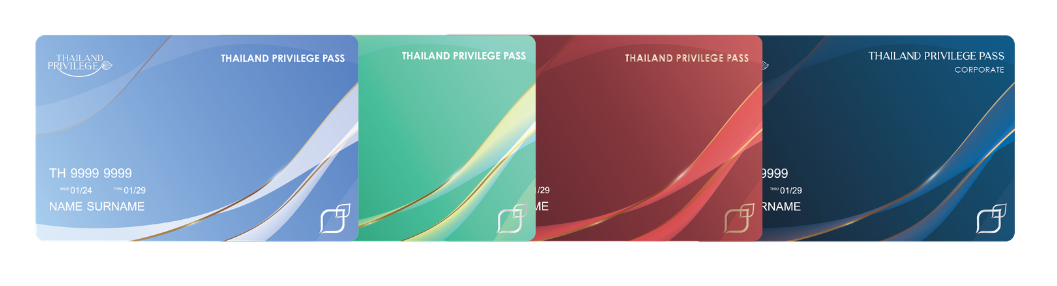
Thailand Privilege Card membership tiers are structured to suit a range of residency timelines and lifestyle priorities.
Platinum, Diamond, and Reserve tier members may add qualifying immediate family members through a supplementary membership*, with updated 2026 pricing as follows.
*Supplementary membership is available as a limited offer.
Important notice
All Thailand Privilege Card membership tiers grant long-term visa status only. Members are not permitted to work or study in Thailand under their membership.
Thailand's tax environment remains among the most favorable in the region for long term foreign residents, and Thailand Privilege Card provides the residency stability to plan around it with confidence. Starting with Thailand Privilege Platinum Card, explore the full range of membership tiers and privileges at thailandprivilege.co.th and take the first step toward a well supported, financially informed long term life in Thailand.
Please note that all Thailand Privilege Card membership fees, benefits, and offers mentioned in this article are subject to change. For the most current pricing and terms, please visit the official Thailand Privilege Card website or contact Member Contact Center (MCC) directly.
Thailand's statutory VAT rate under the Revenue Code is 10%, but the applied rate has been held at 7% through ongoing royal decree extensions, most recently through at least September 2026. Until a formal legislative change is enacted, 7% remains the operative rate for standard transactions across goods and services in Thailand.
Government discussions about increasing VAT to the statutory 10% rate have been reported in Thai financial media. However, no confirmed short term implementation plan has been announced as of the time of publication. Any future increase would likely be phased gradually rather than applied as a single immediate change. Readers should monitor official Thai Revenue Department announcements for the most current information.
At the current 7% rate, VAT has a relatively moderate impact on day to day living costs compared to Western tax systems operating at 15 to 25%. For most daily purchases, VAT is already included in the displayed price. The most notable addition comes from the combination of 7% VAT and a 10% service charge at mid range and upscale restaurants and hotels. Even with this combined addition, Thailand remains significantly more affordable than most comparable Western living destinations.
Residential rental income for individual landlords is generally not subject to VAT in Thailand, meaning that rent sits outside the standard VAT calculation for most private housing arrangements. Utilities, building management services, and professionally managed serviced apartments may include VAT. Expats should confirm the VAT treatment of their specific accommodation arrangement with their landlord or property manager.


Bangkok's best malls, from Siam Paragon to Iconsiam, make it one of Southeast Asia's top destinations for luxury shopping and premium retail.

Bangkok's nightlife spans rooftop bars, night markets, live music, and street food. Here is where to go out in Bangkok as a new long term resident.

Discover where to play the best golf courses in Thailand and how Thailand Privilege Card supports long-stay golfers with year-round play and perks.

Thailand offers some of the best wellness retreats in Asia for yoga, detox, and holistic health, drawing expats and retirees seeking long term balance.

Thailand's two coastlines and hundreds of islands make it one of Asia's most popular yacht destinations for luxury sailing yacht holidays year round.

Two coastlines, opposite seasons, and hundreds of islands make a Thailand island hopping tour unlike any other travel experience in Asia.

Discover the best things to do in Koh Samui for visitors and residents, and explore why this island is ideal for long-term living in Thailand.

From world class hospitals to dental savings of up to 70%, here is why Thailand medical tourism draws over 1.4 million patients a year.

From cool season to monsoon rains, here is Thailand's climate by month and what long term residents need to know before moving to Thailand.

From markets to night eats, here is a guide to Chinatown in Bangkok and how a multiple entry visa in Thailand makes exploring it all easier.

A practical guide to planning a wedding in Thailand for couples who are considering moving to Thailand afterward.

Find out where to exchange money in Bangkok, Chiang Mai, and Phuket, plus how Thailand Privilege Card supports a long-term financial setup.

Discover Thailand's best water parks for families and expats. From Phuket to Bangkok, explore world-class attractions that make Thailand home.

Want a sustainable adventure in Thailand? Discover how to live an eco-conscious life while gaining long-term residency and luxury perks with the Privilege Card.

Escape winter! Thailand offers a year-round paradise. Make it your hassle-free second home with the Privilege Card, securing long-term visas and exclusive perks

Maximize your travel efficiency and overall experience! Learn expert strategies to effectively utilize you fast-track service and other valuable benefits
.webp)
Ready to ignite your senses with Thailand's captivating festivals in the latter half of 2025. Explore ancient rituals, colorful parades, and local celebrations.
.webp)
Dive into Thailand's vibrant music and arts festivals! Experience how these events reflect the dynamic pulse of Thai pop culture. Join the celebration!

Explore contemporary Thai arts and crafts that bridge tradition with modern inspiration. Uncover unique creations, from intricate textiles to modern sculptures.
.webp)
Go beyond Muay Thai. Explore the full spectrum of Thai martial arts, including "The Art of Eight Limbs" and lesser-known, powerful styles. Deepen your knowledge

Planning your Thai adventure? Navigate the tourist visa process with confidence. Our guide simplifies every step, ensuring a smooth start to your journey.

Tee off in paradise! Discover Thailand's world-class golf courses, offering stunning scenery and an unforgettable experience for every golfer.

Fully experience Thailand Pride Month 2025! Our guide empowers you to join the celebrations of love and equality, showcasing Thailand's vibrant spirit

Your ultimate escape awaits at Cape Fahn Private Islands, a premier choice among Koh Samui. Exclusive Thailand Privilege card can enhance your long-term stay.

Phuket is renowned for its stunning coastline, offering some of the best beaches in Phuket for travelers seeking sun, sea, and serenity. Among these gems.
.webp)
Phuket offers an array of villas perfectly suited for foreigners looking to experience the island's charm. Whether you're planning a short getaway or a long-term stay
.webp)
Experience luxury with Thailand residency benefits, including the prestigious Thailand Privilege Card, granting exclusive perks at Michelin-star dining in Bangkok.
.webp)
For golf enthusiasts seeking a memorable vacation or extended stay to explore Thailand's courses, the Thailand Privilege Card offers luxury and convenience.

Thailand has long been a popular destination for retirees, and it’s easy to see why. With its warm climate, affordable cost of living, friendly locals, and stunning landscapes, the country offers an appealing combination for those looking to relax and enjoy their golden years.
.webp)
In Pattaya, enjoy thrilling beach activities, luxurious stays, and exclusive perks with the Thailand Privilege Card for an unforgettable vacation experience

Discover Bangkok on a Chao Phraya River cruise, from serene sunsets to cultural tours. Use the Thailand Privilege Card for exclusive perks and seamless travel.

The island is packed with all sorts of fun water activities, from snorkeling to parasailing to zipline in the jungle and the list goes on. The night life on this island is also second to none
.webp)
If you wish to unwind, imbue the fancy art and be soothed by nature, Chiang Rai is the place to be. Located in the northernmost region of the country, Chiang Rai features untouched nature that rubs shoulders with the artistic Lanna culture. The province is starting to get more hip, with more cafés and restaurants popping up.

The metropolis that never sleeps, Bangkok is the has-it-all destination with a never-ending list of places to be explored from morning through night. Whether you are into art and culture or food, the city will startle you with the best of the best, delivered with flair.

For our very first highlight Thailand section, we would like to share with ...


Enter PIN
Please enter your pin code to continue.

Only for Thailand privilege card membership
Please log in or register card membership to redeem of experience more excluslve privileges